All your holiday planning needs in one place, letting you book direct and benefit from official online rates
palma de mallorca sightseeing and city guide
Palma, one of Europe’s most popular cities, boasts centuries of changing cultures and vibrant life. Here you will find everything your heart desire, from latest fashion trends to exceptional architecture, fancy galleries and fantastic eateries.
- This is where I want to go!
What to expect from palma?
On several occasions, Palma has been prized as one of Europe’s most fascinating cities. It has even been said to be the greatest place to live, in the world. The city has seen many different cultural changes throughout its life span, every single one of them have left a mark in the bricks and people.
Palma is a notorious shopping mecca, that any fashion lover should have on her/his bucket list. But even if you are not an eager shopper, you’ll still find the amount of stores intriguing, especially in the areas closest to the Placa Major.
Sightseeing in Palma
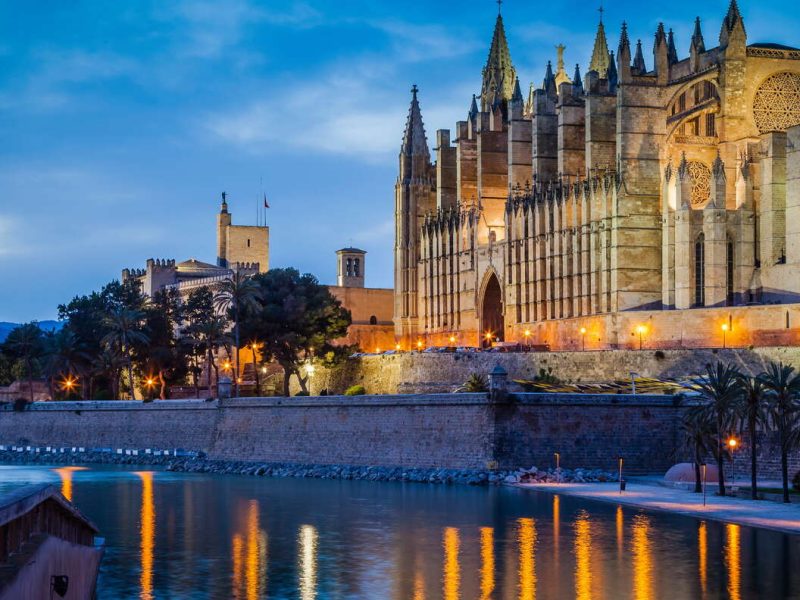
I’ll be blunt with you. You won’t be able to see everything worth seeing in Palma in just a day or two, it’s just not doable. However, you can enjoy most of the major tourist attractions such as the cathedral, the Bellver, the Almudaina, as well as the enchanting city center and all of its facets. I recommend that you start your trip with a hop-on hop-off bus. It will circuit the city center and give you a good introduction to the city.
Below I have gathered some of my favorite sights in Palma.
IMAGE GALLERY
Enjoy some beautiful pictures from Palma.
Book your trip
FAQ
It takes just 10 minutes to drive from the Sant Joan International airport to the cathedral near the city center of Palma.
As with any capital city, Palma can be visited all year round. During the high summer season (June – September), the city can be extra crowded and hot.
Yes, Palma is very safe to visit. You should, however, always be cautious and keep your personal items hidden and close to your body at all times.
Expect to pay somewhere around €100 per night during low season and €150 per night during high season.
Annual Events in Palma
Daily and weekly markets in Palma
Mercat Artesanal
Every day in Placa Major in central Palma, the artesian market is held. Here you will find crafts such as wickerwork, leather goods and traditional clay products from Mallorca. The artesian market is open every day from 10 a.m to about 1-2 p.m.
Mercat de Santa Catalina
You have probably heard that Santa Catalina has grown popular in the recent years. Due to the rising interest in this area it now has a quite extensive market, which is held every day between 7 a.m and 2 p.m. The market in Santa Catalina offers a wealth of fresh fruits, vegetables, meats, cheeses and crafts. You will find the market on Placa Navegacio.
Llotja del Peix
Palma’s daily fish market held on the harbour of Moll de Pescadors. The fish market starts when the fishing boats returns from a night on the sea about 6 a.m. If you like fish and you are renting your own flat or house close to Palma, do try this.
Mercat Olivar
Mercat Olivar is the biggest food market in Palma. It is held in the big market building on Placa Olivar about 5 minutes from Placa d’Espanya. The market is held every day from 8 a.m and closes around 2 o’clock in the afternoon. Let your senses be seduced as you browse and sample the fresh local produce from the Mallorcan countryside.
Rastro Market
Every Saturday morning, on the street of Avinguda Gabriel Alomar i Villalonga, you will find the flea market in Palma. The market starts in the morning around 8 o’clock.
Night market of Sa Bimbolla
From the end of June til the end of September, go visit the night market of Sa Bimbolla, held in an old warehouse in the northern part of Palma. Sa Bimbolla is as much a market as it is a fair, a night of joy and entertainment, which begins at 6 p.m and continues to 2 a.m. Sa Bimbolla is held every Sunday in Gremi Velluters 14. Poligon Son Rossinyol.
January
Sant Sebastiá
On January 20th, Palma celebrates the patron saint of the city, Sant Sebastiá (Saint Sebastian). The festivities takes place over two weeks, in which fun and cultural activities will take place all over the capital, including the popular holiday area of Ca’n Pastilla. Among some of the best things from a touristic point of view, are the many concerts held during the two weeks. Moreover, the dancing devils and fire runs are extremely audience-friendly.
February
Carnival / Sa Rua
At the end of February and beginning of March, the annual sa Rua (Carnival) is held in Palma. Get ready for the most kaleidoscopic parades on the entire island, dancing through the streets of the capital to celebrate the end of the winter. Combined with the regular Carnival, you can also enjoy the joyful sa Rueta, the children’s Carnival parade, which also comprises workshops, family activities and games.
March
Craft beer fair
In the middle of March, you can indulge in a wide variety of craft beer, when the craft beer fair is held in Platja de Palma at Bierkönig. At the fair, you will find the best craft beers of the island, accompanied by live music concerts, tastings and demonstrations.
Mallorca Degusta
The intention of the organizers of this fair, is to bring you closer to the gastronomic culture of Mallorca and all the aspects of it. You are invited to come taste some of the best local wines, vermouth, variats and tapas, carefully selected and made by chefs of different restaurants. Mallorca Degusta is an excellent opportunity to both taste and learn about the rich gastronomic culture the island comprises.
Fira de Son Ferriol
At the end of March, you can enjoy a typical agricultural fair in Palma, yes that’s right. Back in the days, Palma was an agricultural area, especially in the Son Ferriol bordering the rural areas of Algaida and Llucmajor in the most eastern part of the city. At the fair, you can see parades of domestic animals such as sheep, horses, donkeys, black pigs, goats etc. The fair was initiated in order to promote the agrarian lifestyle and the possibilities of this in Mallorca.
April
Fira del Llibre Antic
If you are a book romantic or old school book lover, then the antique book fair is an event you might want to consider. For more than a decade, the cultural center of La Misericòrdia, in collaboration with the Department of Culture, Heritage and Sports of the Council of Mallorca, has arranged this second-hand book fair that seems to grow in popularity year after year, as people have found the charm of an old printed book no longer available in the bookstores. Every year, a wide array of bookstores, local and from other Catalan speaking areas, participate in this event that gathers hundreds of interested collectors. Perhaps an antique printed book in Catalan is the most saying and memorable souvenir you can bring home?
Beer Palma
If you are a beer lover, or simply enjoy a cold beer under the Mediterranean sun, then Beer Palma is the event to visit in April. More than 100 varieties of the best beers from all over the world are available during this festive and tasteful fair held in the area in front of the cathedral. The fair has consolidated itself as one of the best events for beer enthusiasts in Europe, an event of great taste.
Salón Náutico Internacional
The biggest international boat show in the Balearic Islands is held in Palma at the end of April every year. The boat show is one of the most important commercial fairs on the island, and attracts more than 50,000 visitors every year. At the boat show, you will find a wide array of various vessels, nautical clubs and products related to the maritime theme. Mega yachts, speed boats, sail boats, hover crafts etc. are all on display in the Port Vell of Palma. During your visit, you may also indulge in some of the best nautical gastronomy to complete the atmosphere.
Fira Llonguet
Fira Llonguet is a fair dedicated to the local type of bread of same name particularly popular in the neighborhood of Es Pil·larí. The fair is organized by the Association of Neighbors of Pil·larí, with collaboration of the city council of Palma and the Association of Bakers and Pastry shops, and features a range of stands and booths offering varieties of the Llonguet bread. The fair also has an artisan market and there are several interesting events to have a look at.
May
Wine Days
Mallorcan wine is experiencing its possibly best era ever these years. If you are fond of a good glass of wine, then this fair dedicated to the enological traditions is exactly what you want to attend in Palma. During the fair, you will learn about the wines, the production, and, the latest culinary trends associated with the wines of the island. There will be a range of demonstrations, activities and excursions, that will give you a unique insight in the Mallorcan wine industry and wine tourism.
Snail Fair in Sant Jordi
Snails is a typical and highly treasured ingredient in the Mallorcan cuisine. At the snail fair in the area of Sant Jordi (eastern Palma), you can learn about the many species of the island, the taste of each species and how to cook them properly. There will also be plenty of tastings of traditional and innovative recipes to enjoy at the fair.
Nit del Vi (Night of the Wine)
The Association of Small Wineries in Mallorca hosts wine night event in the courtyard of the cultural center of La Misericordia in Palma. About 35 small wineries (petit cellers) are ready to showcase their tasteful creations of more than 200 varieties of wine which you can come enjoy and learn about. It is a pleasant and cozy event that gathers both locals and tourists, all interested in wine and unique taste.
Veg-Fest Mallorca
As the name suggests, VegFest is for you who are curious on the vegetarian or vegan lifestyle. VegFest is held in the Sa Possessio, the same place as the night market of Sa Bimbolla, in the northern end of Palma.
Palma Book Fair
The annual book fair in Palma is held in the beautiful street, Passeig del Born, close to the cathedral. For ten days, the street is occupied by bookstores from all over Mallorca and curious book lovers browsing the many titles on display. During the the ten days, there will be a series of events and activities such as workshops, talks, book signings and musical performances.
June
Evening of Sant Joan
The evening of Sant Joan is a cultural and festive event where you will be acquainted with some of Mallorca’s most emblematic traditions; demons and fire runs. Sant Joan’s eve offers traditional folklore dances and celebrations to mark the shortest night of the year, with a spectacular finale of fireworks and concerts. The events are taking place in the Parc de la Mar with the imposing cathedral in the background.
Voramar
Voramar is a two-day gastronomic and craft market held in Ca’n Pastilla. Voramar is a fun and cultural happening aimed at tourism, with swing dancing, musical performances, playgrounds, childrens’ entertainment, food stalls and much more. The event ends with a traditional correfoc (fire run), a typical tradition of Mallorca.
September
Nit del l’art
The night art fair in Palma is a special and spectacular happening where art is flourishing in the charming streets. Nit del l’art is the night when galleries celebrate the opening of their season, exhibiting amazing collections of works of established and upcoming artists. There is also a great collection of street art that gives the perfect contrast to the old illuminated streets of Palma.
Fit-Salut
The last weekend of September is dedicated to good health and active lifestyle. During the Fit-Salut weekend, you can come try some fun activities and sports, as well as learn about the latest training trends, healthy lifestyle and innovations related to this. It’s a fun and interesting weekend full of great inspiration and smiling.
Cultural Diversity Fair
Palma is home to a range of different cultures, not just in terms of its rich heritage, but also its current residents. Therefore, it makes perfectly good sense to have a fair that shows off the many different cultures that lives in the city. Come to Parc de la Riera and experience a world of diversified cultures that all have one thing in common; Palma.
Fira B!
Fira B! is a fair dedicated to music and performing art of all kinds.The aim of the fair, is to promote local artisst of the Balearic Islands to an international audience. Artists, producers, managers, venues etc. are all present here ready to show, listen, see and feel, and you are invited to join the party.
October
Vinyl Fair
Does your heart fill with nostalgia when you see or hear an old vinyl record? If so, you are just one of many many people who share the love for the sound of retro. During the weekend, you can meet other collectors, record store owners and many performing artists such as bands, DJ’s and solo vocalists who perform on the stage in Palma Arena. If you are looking to complete your collection, this is the fair you want to attend.
Antique and vintage fair
Do you find antiques and vintage stuff charming? If so, the Palma antique and vintage fair held during October is the place to go. Come browse hundreds of interesting finds and collectables, meet other enthusiasts and enjoy the cozy ambience.
Expohabitat Mallorca
If you are excited about the newest interior design trends, home decor etc., then the Expohabitat fair is for you. Everything related to furniture, comfort, equipment, design, even real estate management is on display during this fair, so if you are thinking about redecorating your home come find inspiration here and meet the experts in the field.
November
Bridal Fair
Mallorca is by far one of the most romantic places in the world to get married, fact! There are so many picture perfect and beautiful venues on the island that are as created for the ultimate dream wedding. In the bridal fair in Palma Arena, you can find inspiration for everything related to the wedding of your dreams such as cakes, decor, dresses, venues etc., it’s the perfect place to start your wedding planning process.
December
Solidarity Christmas Market
Every year, the association of Es Refuge organizes a charity Christmas market in the courtyard of the La Misericòrdia cultural center. The purpose of the event, is to raise money for those who are less fortunate. Es Refuge collects antiques and second-hand items from donators all over the island, and sells them at the Christmas market to turn a profit.
Christmas Market in Pueblo Español
The perhaps most cozy and ambient Christmas markets in Palma, is the Pueblo Español market held in the replica village. The market perfectly combines the all the best elements of the European Christmas markets, creating a jolly and cozy atmosphere between the stunning buildings. Come enjoy live music, hundreds of stalls, food, colored lights, performances and much more, this is a one of a kind Christmas market not to be missed. Pueblo Español is tourist attraction exhibiting replica buildings of some of the best Spanish architecture telling the stories behind them.
Support Local
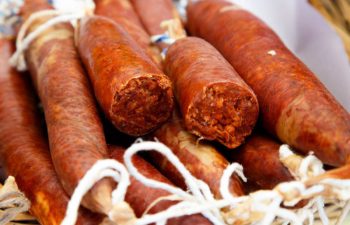
Supporting local communities during your travels can have a profound impact. Stock up with groceries locally, stop in an artisan shop or enjoy a refreshment at a restaurant or bar. Now more than ever, these small businesses need support from travelers near and far.
The history of Palma de Mallorca
Get to know Palma and its history
Palma is the capital city of Mallorca and the seat of the Balearic government. Palma is also the the name of the region in which the municipality is located, one of the six regions of Mallorca.
The entire region covers a surface of 20,855.73 hectares and comprise 416.065 inhabitants (2019).
History of Palma
Unlike many other villages and towns in Mallorca, there is no documented evidence of prehistoric activity or Talayotic culture in the area of the current city of Palma. Some archaeologists have suggested that the original location of Palma should have been somewhere else, however, this theory has later been rejected based on the evidence found in the city.
The Roman city
In spring 123 BC, Roman consul and general, Quint Cecili Metel, set sails from the Iberian peninsula with 3,000 men ready to initiate a military campaign to conquer Mallorca.
The true purpose of the campaign is still uncertain, however, there are several very likely suggestions, which, when added together gives us a better idea of the incentive. The first suggestion, is that Metel at the time of the conquest had no remarkable military achievements behind him and a conquest of new territory to add to the Roman empire would affect his legacy. The centuries of wars against the Punes and encounters with Mallorcan tribes, made it an obvious goal to prove his worth as a strategic. The second theory would be the to include the Mallorcan Slingers (warriors) in the Roman army. The Slingers had caused great damages to the Roman army during the Punic Wars and therefore their strength and scourges had become renown and feared all over the Mediterranean region. The third and most emphasized theory, is that the Romans wanted to put a stop to all Phoenician trade in the Mediterranean region. Moreover, the Romans wanted to make use of the naval routes to connect the empire, as the travel between Italy and the Iberian peninsula was difficult and took much time.
Metel knew what his was up against, he knew that the Mallorcan tribes has allied themselves with pirates that would defend the island at sea, as well as he knew that the projectiles of the Slingers could cause his ships to sink. A stroke of genius from him, was to tighten leather around the ships to form some kind of shield to protect against the shots fired at them thus being able to land on the shores. After defeating the pirates and opposition at the shores, a long arduous quest begun to find the indigenous inhabitants and communities located all over the island. The indigenous people had retrenched themselves in fortified structures built during the Talayotic period, however, to a trained and professional Roman army they were no match.
About one and a half year later, the Romans could call themselves victorious. In 121 BC, Metel was honored in Rome and given the nickname “Balearicus”, after having founded the two major cities of Palma and Pol-lentia, the latter recognized as the capital. It is important to stress, that Mallorca was not a colony but a province of the Roman empire known as “Hispania Citerior”, however, Palma itself was considered more of a outpost occupied by Roman citizens associated with the Velina tribe. In the following centuries, the urban core started to develop with the current streets of carrer Sant Roc and carrer de l’Estudi General being the axis of the main decumanus maximus (east-west oriented road), connected by the forum. This area corresponds to the current area of l’Almudaina, in which a doorway from that time is preserved in the carrer de l’Almudaina.
Vandals and the obscure centuries
In 406, Vandals took advantage of the ice on the Rhine entering the Gaul, heading towards Rome and Hispania. In 409, the Visigoths attacked Rome while Vandals had already reached Cartago Espartaria (current Cartagena), and in 455 they reached Palma. The nomadic life of the Vandals has given reason to believe that their entrance in the Mallorcan history caused destruction due to their strides with the Roman empire. However, there are no documentation of massive destruction of neither Palma or Pol-lentia, in fact, Pol-lentia is meant to have been inhabited in the following centuries based on founds.
The centuries between the 5th and 9th was known as the “obscure” due to the continuous change in cultures which occupied the island.
The Byzantine period
When the imperial power of Rome along with most of the western part of the Roman empire fell in 476, the same did not happen to the eastern part of the empire. From the capital of Constantinople (current Istanbul), Roman emperor, Justinian I, launched a range of military campaigns to recapture parts of the lost western Roman empire including the Balearic archipelago. General Belisari managed to take the kingdom of Africa (current Tunisia and parts of Libya and Algeria) in 533, while General Apolinar completed the recapture of the eastern Mallorca and Menorca in 534. Justinian made Mallorca a province of Mauritània Tingitana (current Morocco) with capital in Ceptem (current Ceuta). This period is referred to as the “Byzantine”, that also brought the introduction of Christianity to the Balearic Islands according to the law of Theodosius I. However, a Jewish community that had arrived in Mallorca during the 5th or 6th century remained in Palma throughout the successive periods of the city. There has also been found mosaics in the site of the current cathedral of La Seu indicating the presence of a paleo-Christian temple.
The Islamic period
In 902, the Balearic Islands came under rule of the Emirate of Córdoba, and Palma was renamed to Madīna Mayūrqa. Issam al-Khawlaní was the protagonist of the conquest of the island, however, paid by Emir Abd Allāh ibn Muhàmmad, by whom he was awarded Walí (governor), a position he held until 912. Issam al-Khawlaní came across the archipelago during a pilgrimage to Mecca where he and his ships took refuge during a great storm. After returning home, Issam al-Khawlaní informed the emir who urged him to plan the campaign to take the islands. After carefully studying maps and defense systems, Khawlaní set sails to take Mallorca and incorporate it into the Al-Andalus.
Issam al-Khawlaní reconstructed and enlarged the urban city center, he transformed the shape from rectangular to radial according to the style of Baghdad. Also at that time it was the most important urban center of the islands. He also built mosques, inns, public baths, toilets and water canals supplied from sources and springs six kilometers from the city border. One of the most significant and remarkable constructions from his time, is the l’Almudaina palace which was located in the very heart of Madina Mayurqua.
A new societal structure was soon introduced with the arrival of Berbers, Arabs and Andalusians, who came to live in more tribal like communities. Medina Mayurqua soon turned into the most important harbor area in the Mediterranean region, due to its location in the middle of Muslim and Christian territories. The location allowed the walí to launch looting raids against Christian vessels in the Mediterranean sea, hindering them to trade.
The instability and eventually fall of the Caliphate of Còrdoba allowed the self-proclaimed emir, Muǧāhid ibn Yūsuf, to incorporate Mallorca into his emirate of Dénia in 1015. Madīna Mayūrqa was the seat of the walí and his closest advisors, as well as a refuge of intellectuals such as Ibn Ḥazm from Còrdova, who was a poet, theologian, philosopher and jurist. Throughtout the 11th century, Madina Mayurqua continued to grow and prosper from pirate raids. The defensive wall around the city was erected with three enclosures as the Almudaina was a part of.
In 1114, Catalans and Pisans, led by Barcelonian count Ramon Berenguer III, launched a retaliatory mission towards the city as a reaction to all the pirate raids. The Christian troops took advantage of a few holes in the city wall making it easy for them to break through and get inside the walled enclosure. Madina Mayurqua was under siege for eight months as the Christian troops plundered and barbarically murdered as they pleased, eventually burning down most of the city. Today, many of the treasures from this raid are still preserved in Pisa. Due to threats of the Almoravids in Barcelona and other places in the Mediterranean region, most of the soldiers left Mallorca in 1115 allowing for the Almoravid army to approach.
In 1148, Ishāq ibn Muhammad ibn Ġānīy, head of the Banû Ġānīy family, signed a treaty in Pisa and Genoa which led to trade between Mallorca and these areas and made Madina Mayurqua even more important and prosperous. In the following 50 years, the city was considered the most important and prosperous cities in Al-Andalus reaching a population of more than 25,000 people. There were several fortified walled enclosures, the Alcazabas, with gates and towers. The main enclosure was the Alcazaba which occupied the site of the ancient Roman Palma, as well as the Almudaina palace, seat of the walí. These enclosures would occupy houses, mosques, markets, baths, ovens, mills, shops, workshops, cemeteries, orchards and gardens. The three Alcazabas were divided by a road called “La Síquia”, that was located in the current streets of carrer de Sant Miquel and carrer del General Riera. In the eastern part of the city, there was another fortification, the l’almudaina de Gumara (el Temple).
However, in 1203 the Almohad caliph Muhammad an-Nâsir set sails from Dénia determined to conquer Mallorca, the last of the Almoravid strongholds of the Al-Andalus. The Almoravids had launched attacks on Almohad dominions in North Africa, and with the many conflicts in the Mediterranean region, this was an obvious chance for the Almohads to retaliate and put an end to the Almoravids. The victory of the Almohads was definitive after just a year or so of fighting, and from here the islands was controlled from Marrakech. In 1208, Abu-Yahya Muhàmmad ibn Alí ibn Abi-Imran at-Tinmalalí was inserted as walí of Mallorca, and was the last to rule before the Christian conquest in 1229. From 1212 to 1229, after the Battle of Las Navas in Toulouse, he ruled the islands independently from the caliphate.
The Christian conquest
In the beginning of September 1229, King Jaume I landed in Santa Ponça with 150 ships carrying 700 horsemen and 20,000 ground infantry. After defeating the Muslim army of Abu-Yahya Muhàmmad ibn Alí ibn Abi-Imran at-Tinmalalí in Portopí, Palma was under siege by the Christians who plundered and murdered all Muslim resistance between September 14th to December 31. More than 20,000 Muslims was killed in this period. About 30,000 Muslims who was not killed or taken as slaves, fled to the Tramuntana or Llevant mountains to hide, but was later captured or killed. The last resistance of Muslims took refuge in the fortified enclosure of Almudaina and Abu-Yahya inside the Almudaina palace. Jaume I seized the palace and killed Abu-Yahya. Some references claim that Abu-Yahya’s son was also killed by Jaume I, while other sources claim that he was kidnapped and brought back to Catalonia. In the Llibre dels Feits (Book of Facts) it says “The most beautiful city we had ever seen, well defended by its walls and towers, valley and barbican”. In the years to follow, the armies of Marseilles, Genoa, Pisa, as well as the Knights Templars and Knights Hospitallers carried out the rest of the conquest of the island under leadership of Pere de Portugal. The new dominion came under the reign of Aragón under the name of “regnum Maioricarum et insulae adyacentes”.
Ciutat de Mallorca
The new Christian settlers renamed Madina Mayurqua to “Ciutat de Mallorca” (City of Mallorca), which was mostly occupied by Catalans, and incorporated a new social structure mainly divided by knights, citizens, merchants and craftsmen. Small groups of Muslims remained in the city, some integrated and some fled to North Africa and Menorca. There was also a group of Jews that had stayed in the Almudaina area during the Islamic period. In 1249, Jaume I established a so-called “Jurado”, a council consisting of six members of which one had to be a knight. The Jurado was the official political body of the city and island that handled everything in regards to criminal justice, social coexistence, private and public affairs, twists etc., and was in function until 1715.
In 1232, Jaume I established the ecclesiastical organization and declared Bernat de Sant Feliu de Guíxols bishop of Mallorca. The first bishop of the diocese, however, was Guillem de Torrella, whom was appointed in the bishopric of Mallorca in 1238. The Ciutat de Mallorca was divided in four parishes; Sant Jaume, Santa Eulàlia, Santa Creu and Sant Miquel. These four parishes was meant as religious centers attracting orders such as the Franciscan, Claretian, Cistercian, Dominicans, Mercedaris, etc. Later, the church and parish of Sant Nicolau was added as the fifth. The new city of Mallorca (civitas Maioricarum) faced a major restoration and expansion to correspond to the needs of the new settlers, among these changes was the conversion of mosques into chapels and churches, as well as all Islamic place names. The first Christian temple was the current church of Sant Miquel which was built on top of the former main mosque. Of other significant changes, the Almudaina palace was converted into a residence of the king and his lieutenants, and the mosque of Almudaina was replaced with a temple corresponding to the current location of the cathedral.
Following the death of Jaume I in 1276, his son, Jaume II, was crowned king of Mallorca. During his reign, several remarkable construction projects was initiated such as the construction of the cathedral, the restoration of the Almudaina palace, the Bellver castle (1311), the convent of Santa Clara (1256), Sant Francesc (1279), Carmelites (1321) and Sant Domingo (1359). At this time, Ciutat de Mallorca (Palma) shared its status as capital of the Kingdom of Mallorca with Perpignan. The following 60 years were characterized by turbulence and political disagreements between the kings of Mallorca and Agarón, which eventually led to the defeat of Jaume III in 1349 and the end of the kingdom. However, despite of all the conflicts, Ciutat de Mallorca experienced great increase of trade due to the privileged location of the city, the port of Mallorca was actually considered one of the most important and prosperous in the Mediterranean district. Moreover, even though the rumors was out that Mallorca was undergoing political crises, pirates seemed to have a certain amount of respect for the ships of the city discouraging them from trying to assault. During the 14th century, Mallorca considerably strengthened its relationship with Portugal, North Africa, Barcelona, Valencia, Italy and even Flanders, making it an attractive marketplace where merchandise worth thousands of llires were in transit or deposit every year. The wealth of this time is seen in the old market building of La Llonja designed by Guillem Sagrera in the years between 1426 and 1447, is one of the best evidences of this. Another important aspect, was the need to establish the Consulate of the Sea, an authority to regulate the maritime marketplace. Also during the 14th century, the Jewish community was quite large, more than 250 Jewish families are recorded. The Jewish community had significant socio-cultural impact on the city of Mallorca, and were mainly resided in the areas of sa Calatrava and el Temple (Gumara). The primitive Gothic style church of Santa Fe actually used to be a synagogue.
The dark end of medieval times
At the end of the 14th century, Ciutat de Mallorca faced a decimation in population and increased gaps between social classes. The annexation of Mallorca to the Aragonese federation after the defeat of King Jaume III in the Battle of Llucmajor, left the island in an unfavorable position coinciding with the Black Plague in 1349 and the epidemic of 1375 where famine caused the deaths of thousands of people. The lack of ability to produce wheat and cereals led to many deficit households, especially in the rural areas surrounding Ciutat de Mallorca, contributing to an unequal economy. Also, in 1403 the torrent of sa Riera that is crossing the city went over its shores and tragically drowned hundreds of people. A phase of economical growth and expansions was replaced with divisions and reckless accusations between societal groups. On one side, the luxury was increased, the unions were formed and organized, the public festivities were abounded, the major construction works such as the La Llotja was continued and there was a general wish to “advance in class”. On the other side, in the rural areas of Ciutat de Mallorca and in the rest of the island, the production decreased, fewer hands were available and the dependency of economical support from Barcelona grew to the point of burst, only avoided by the Contracte Sant (Holy Contract) of 1405. Mallorca was also obligated to provide support for the Catalan effort in controlling the Mediterranean sea, with the consequent loss of money, ships and men. All of the instability, uncertainty and economical fragility provoked a societal malaise causing riots and chaos. The people of the rural areas, the forans (foreigners), mobilized themselves against the oppressing citizens of the city, a conflict referred to as “forans i ciutadans” (Foreigners and Citizens). In 1391, the foreigners blamed the poor economical state of condition on the Jews who was murdered, threatened to baptize or convert, or forced to flee to North Africa. Between 1450 and 1453, the Revolta Forana (Revolt of the Foreigners) broke out and a civil war was a reality. Ciutat de Mallorca was besieged several times during this period until Italian mercenaries, sent by Alfonso the Magnanimous, came to the citizens’ rescue, who took advantage of the situation and applied even more pressure on the foreigners creating an even bigger gap in social classes. The same citizens, however, had lost most of their guards and armed men in battles, which had them organize in weaponized groups such as Calls, l’Almudainas, Armadans and Espanyols, hindering any municipal or political body to function properly. In 1447, Alfonso the Magnanimous used the system of drawing names of from a sac to constitute a municipal magistracy, a system used in Aragón since the mid-thirteenth century known as “insaculación” (to put in a sac). The non-acceptance of Mallorcan delegates in the Compromise of Caspe, a parliamentary act to determine the successor of the Crown of Aragón after King Martin of Aragón in 1410, resulted in a great depression on the island as it was still experiencing wealth in maritime sectors. This was one of the most clear evidences of the fall of the Mallorcan school, which also produced mistrust amongst people. Anselm Turmeda was one of the most highlighted and representative figures of this time, as he encouraged a return of Islam in the Ciutat de Mallorca due to the mistrust to the Franciscan order.
A stormy entrance to the modern period
At the end of the 15th century, Ferdinand II of Aragón introduced a policy of redress in Mallorca, in an attempt to restore economy and order from the previous period of chaotic states, which was a success to some extend, although no one could do anything about the epidemics, droughts, banditry, internal conflicts etc., which seemed to exacerbate themselves throughout the 16th and 17th centuries.
In 1499, Ferdinand II appointed lieutenant general of the former Kingdom of Mallorca, Joan d’Eimeric i Saplana, who promulgated the pragmatics seen in Granada, with the clear aim to restructure the administration of the island; its politics, economy and amortising of public debt. The system would also regulate the royal intervention in the election process of new politicians i.e. positions and representatives required by the new policies. This policy was not well received in the urban oligarchy that did everything in its power to boycott it and have it revoked.
By an arbitration ruling in 1512, it was commanded that all goods of the kingdom was to be estimated in order to create a new taxation in which everyone would contribute according to their possessions. This system was too boycott and opposed by the urban oligarchy of the city which caused more distress and paved the way of a new revolt of the people, the revolt of the Germanies. The revolt of the Germanies, or the revolt of the Brotherhood, was a guild of artisans with their own idea of how the public debt should be amortized. Inspired by a similar artisan guild in Valencia, the Germanies of Mallorca was formed in 1521. They elected a commission of thirteen representatives led by Joan Crespí and Joanot Colom, with the clear goal of convincing Charles V to amortize all public debt. In the beginning, a diplomatic and peaceful approach was taken, however, soon after, when there was no positive response from the king, things turned sour and violent. Joan Crespí was executed by his own men in the Bellver castle and Joanot Colom took all charge, challenging everyone who opposed the Brotherhood to the death. The following one and a half year was the bloodiest period in Mallorca since the Catalan conquest in 1229, friends and enemies died and fled out of the city, many to the walled town of Alcúdia. In the fall of 1522, Charles V sent a delegation of soldiers to the island, commanded by viceroy Gurrea, to pacify the Germanies and restore order once and for all. A brutal battle was fought in the marshes of Sa Pobla between the amateur army and the soldiers, who with almost no effort slaughtered almost 3,000 rebels. The viceroy and his men marched south toward the city, and in December they reached the gates, where they met the last resistance of the Germanies. In the spring of 1523, the Germanies had been extinguished and Joanot Colom was executed in the Bellver castle.
During the same period, a new threat rose in the east; the Ottomans. With the conquest of Constantinople in 1453 and Rhodes in 1522, the Ottoman Empire had control of the eastern part of the Mediterranean area. They paid Moroccan corsairs to chase ships in the Balearic Sea causing a decrease in the commercial value of Palma. During the middle of the 16th century, the city was reinforced with fortifications to cope with the successive attacks by pirates and Turks. The construction of the fortified walls did not end until the 18th century due to interruptions, modifications and constant need for repairs.
The entrance to the modern period also meant the introduction of absolutism as the royal authority continuously gained more strength with interventionism and creation of royal institutions such as the Council of Aragón. It was the viceroy whom represented the monarch on the island and was appointed directly by the king, usually a nobleman from Catalonia, Aragón or Valencia. In the city, there was also an ecclesiastical court under the bishopric of Mallorca and was known as the Holy Office, which resided in Carrer de Sant Miquel where the current Placa Major is found. It was in this office the inquisition happened, and the court only answered to the Council of the Supreme and General Inquisition in Madrid. The inquisition was established in 1488 and more than 500 Jews in the city converted to Christianity. The inquisition stayed inactive for almost 200 years, until in 1675 and 1679 when two trials was held. A secret community of Crypto-Jews was discovered in the city, Jews who practiced their faith in secrecy, which led to an execution in 1691 when 37 Jews were burned, three of them alive, in the place of the current Placa Gomila near the Bellver castle.
At the end of the 15th century, the printing press was introduced in Mallorca, and the l’Estudi General Lul·lià (School of Llullism) was opened, a school that in the seventeenth century was transformed to the university based on a bull of Pope Clement X. Llullism had many followers, both inside and outside the university, but also a great amount of opponents, among these, the Dominicans. Francesc Pou and Bernat Vidal, were two of the most outstanding Lullists whom taught at the university. Later on, in 1629, Bartomeu Llull founded the Lullian School of Our Lady of the Sapiencia.
This period between the 15th and 17th century also gave new dimensions to the language and the usage of this, as the Spanish (Castilian) language started to gain impact on the population. The Monti-Sion grammar school in Porreres started preparing pupils for higher education, contributing to the dissemination of the Spanish language in Mallorca and in the university of the city. But also on the theatrical scene the Spanish language appeared in the 16th century, as typical comedies of the Jesuits started being performed in Spanish. In 1667, the Casa de les Comèdies de Ciutat de Mallorca was inaugurated, a theater that was later turned into the El Teatre Principal, still active and located the same place in Carrer de la Riera, 2.
Palma de Mallorca
Following the French conquest in 1715, the new king, Philip V, decreed the Nueva Planta de Mallorca (New Plan of Mallorca), changing the administrative system of the island. The Nueva Planta definitively established Palma as the name of the capital, instead of Ciutat de Mallorca, and was officially named Palma de Mallorca. Also, the Great and General Council, consisting of jurors and counselors, was replaced by a city council of perpetual councilors appointed by the monarch, and with limited authority to only handle local administration.
The Mallorcan nobility that had been supporters Philip V regained the splendor of past times, before the war, and built imposing palaces and manors in the city. But also many churches were improved and renovated with beautiful Baroque attributes, while others were built again, such as the church of Sant Antoni Abat, noticeable for its stunning cloister, and the church of Sant Martí, later renamed to Sant Gaietà.
In the 18th century, the economy of Palma started to flourish once again. The Economic Society of Friends of the Country of Mallorca was established in 1778, an organization that promoted a school of mathematics and a school of agriculture, trade and construction. The organization also promoted one of the first bulletins of Palma, called “Noticia periódica” or simply “Palma”, which was the beginning of Mallorcan journalism. However, the most noticeable accomplishment of the organization was the signing of a certificate of Charles III, allowing for trade between Palma and America on October 12., 1778. This agreement truly boosted the economy, as shipyards were built, occupation was high and the maritime trading and commerce expanded rapidly.
In March 1808, Palma celebrated the insertion of Ferdinand VII as king. Soon after, the rumors of an uprising against the French reached the island, and on May 30., Captain General, Joan Miquel de Vives, declared the support against the French of Palma in coalition with the Brits. In this period, Palma received an avalanche of fugitives from Valencia and Aragón. It was estimated that about 40,000 fugitives arrived, which in addition to the about 33,000 residents, created an economical pressure on the city as most of these had lost everything. It was also in 1808 that the first real newspaper was born in Mallorca, Diario Político de Mallorca (Political Journal of Mallorca), followed by the liberal Aurora Patriótica Mallorquina started by Isidoro de Antillón, Miguel de Vistorica and Guillem Ignasi de Montis. Lastly, the Diari de Buja followed, the first newspaper written in Catalan. The three newspapers arrived at a convenient time, as the negotiations of Cadíz were ongoing, allowing the printing press to to publish an extraordinary amount of papers and brochures on political and religious topics related to the constitution.
The Constitution of Cadíz arrived in Palma on August 22, 1812. It fragmented the political power of the military, as well as restoring a civil court rather than just a hearing. The inquisition was abolished in 1813, and clothes, portraits and other related items stored in the cloister of the Sant Domingo convent was too abolished. This caused a conflict between liberals and the church, leading to imprisonment of several priests and expulsion of bishops who had come to the city as refugees.
During the second half of the 19th century, a massive increase of the population within the city walls gave rise to the need of an extensive expansion of the urban area and destruction of the walls, estimated by engineer Eusebi Estada in 1885. After an extensive process, the city council finally obtained permission to go through with the project in 1902, and from 1904 to 1909 most of it was carried out. Most of the wall facing the sea was teared down in those years, except the part between the bastion of Sant Pere and del Princip. In the same period, the city council convened a competition on the urban extension project. The Mallorcan architect, Bernat Calvet, and the Barcelonian architect, Pere Garcia, presented the most interesting plans for the new city, however, it was the plan of Bernat Clavet that was chosen. The new city would extend from Plaça de Cort in semicircles of 1,700 meter, and was characterized by the radial and concentric arrangement of the road layout, which limited trapezoidal zones divided by blades that, crossing, originated square or circular squares. The roads became large, and extensive green areas was projected around the torrents of sa Riera and Sant Magí to the west. In 1917, a plan by architect Bartomeu Bennàssar, to reform parts of the old town was approved in the city council. The plan included creation of several large roads, the Plaça de l’Olivar and s’Hort del Rei, but also the promenade connecting el Terreno and es Portitxol, a large park area in the Molinar area and finally, an extensive port area. The entire project breathes a modernist aesthetic. In 1919 the municipality of Establiments, which in 1837 had been segregated from Esporles and had an extension of 1673 hectares, was added to the municipality of Palma.
Palma during the Civil War
The military uprising was initiated by the Junta Divisionària Militar (Military Division) with strong collaboration of the extreme right (Comunió Tradicionalista, Renovación Española, Falange Española) on July 19, with the proclamation of war by General Manuel Goded Llopis of the Balearic Islands. The coup began with an occupation and seizure of the town hall and most central urban areas of Palma, dismissing all republican authorities and deceiving Governor Antonio Espina García. Goded himself traveled to Barcelona, while leaving Coronel Díaz de Freijó in charge. Goded then appointed Lieutenant Colonel of the engineers, Luis García Ruiz, as governor, and Lieutenant Colonel of the infantry Andreu Cifre i Moreno, as mayor.
As both Catalonia, Valencia and Menorca had remained republican territory, the republicans launched several attacks from the air on Palma in the following days. The campaign was launched by the Antifascist Militia Committee of Barcelona, and led by Captain Alberto Bayo, whom had some 8,000 men at his disposition. Bayo manged to land and disembark his troops on the coast of Manacor, on the stretch between Porto Cristo and Punta de n’Amer. They succeeded in occupying Porto Cristo, however, failed to move farther into the island due to the well-organized frontier supported by Italian aircraft delegation, Dragons of Death, led by Aldo Rossi, and paid for by Joan March i Ordinas (founder of Banco March). Bayo ordered the reimbursement on September 4.
After the failed attempt to attack the island by the republicans, a vicious repression was increased in Palma, especially on the leaders of the left wings and on anyone who was suspected of showing sympathy for the republican side. Moreover, the repression prohibited any unions, political parties and cultural organizations. The repression was a tactic to sow panic among the population, thus avoid resistance. Prisoners were held in the Bellver castle, on the ship of Jaume I, in the warehouse of Can Mir and in the military fortress of Sant Carles. In almost no time, the number of prisoners exceeded 1,500. Executions of prisoners happened almost every day, and without trial. Prisoners were told they would be released, however, they were simply taken to the cemetery or a secret place to be executed and buried. The murders were instigated by civil governor, Mateu Torres Bestard, and police chief, Francisco Barrado Zorrilla. More than 2,000 executions happened in those 3 years during the war. Some of the most persecuted people during these years, was the teachers, who were assassinated while teaching, imprisoned and deprived from teaching. As with cultural organizations and activities in Catalan, all books and publications was too prohibited as the the intention was to disseminate the Spanish language everywhere. During the war, the airbases of Palma and Pollença served for Franco’s, German and Italian air forces, to control the Mediterranean area. Ramon Franco was appointed chief of the Balearic Air Zone, a function he served until his death in an aviation accident in 1938.
Despite of the state of civil war, due to sufficient food supply, the citizens of Palma managed to maintain a somehow somehow normal living standard. The economy during these years was based on military supply, light weapons, textiles, footwear and consumer products. Moreover, the lignite mines experienced increased production as the logistic sector too saw great expansion as food needed to be transported to the peninsula.
Post war period
By the end of the Spanish Civil War, the economy was looking at a comprehensive recovery. Agriculture became essential for providing food for the population, while the industry was sharpened by the lack of raw materials. The consequence was shortages, famine, strict rationing of food, emigration, underground economy and smuggling.
The Franco regime did not favor the Balearic Islands; it was the region that suffered the greatest decrease in gross domestic product during the 40’s. The agricultural production fell drastically and many industries found it difficult to produce and export, thus cut off from their markets. The state did not invest in Mallorca, only the new port of Palma and the new city plan of Gabriel Alomar (Pla Alomar de 1943) featuring the street of Jaume III and the connection between La Rambla and Plaça Major, was financed. Also during this expansion of the urban area, the outer ring road was established.
Wages diminished, worsened the living conditions for the average families. The scarce food supply made the prices on the black market reach exorbitant prices. The general health of the population continuously worsened, especially tuberculosis among children was particularly threatening. The regime did create charitable institutions such as the l’Auxili Social (Social Assistance), and all workers were included in the Central Nacional Sindicalista (Central National Union). In 1941, it had more than 60,000 affiliates in the Balearic Islands.
The educational and cultural landscape continued prohibiting the Catalan language and traditions with exception of a few such as certain costumbrismo theatrical plays and folkloric dances. The most retrograde Catholic moral values and militaristic Spanishism were imposed in schools. Catalan literature too experienced great difficulties, however, in 1943, Miquel Dolç published the first Catalan book of contemporary authors after the war, which had new names such as Blai Bonet, Josep Maria Llompart and Jaume Vidal Alcover listed. Llorenç Villalonga, once he had overcome his virulent phase of anti-Catalanism during the war, began writing his work in Catalan.
The first upturn after the war came in the 1950’s, where most economical sectors improved and tourism started to become an important industry.
In this period, the city and municipality was named Palma.
The tourism boom
With the inauguration of the Sant Joan International airport in 1960, and the freeway connecting it to the city, Palma and the rest of Mallorca was ready for mass-tourism. In 1950, there was about 172 accommodation options on the entire island with some 4,000 beds, however, the big boom in tourism was in the period between 1960 and 1973. In 1960, 632,000 tourists arrived in the airport and in 1973, 7,019,000 arrived. The tourism boom triggered other sectors to grow rapidly, such as the construction industry that from 1951 went from 21,500 tonnes of cement consumption to 505,000 tonnes in 1973. The massive and rather sudden demand also called for an investment in immigration as more hands were needed, and between 1960 and 1973, more than 100,000 new jobs were created.
The democratic period
In 1969, Franco appointed his successor as king, the prince Juan Carlos of Borbón. The prince moved to Palma with his wife Sofia of Greece, to live in the Marivent palace, which was declared official residence of the princess in 1973.
Following the death of Franco, the city council of Palma faced a long an d difficult struggle until the first democratic elections were held in 1979. The first municipal election resulted in a victory to the left wing. The constellation of the three parties, PSOE, PCIB and PSM, gave rise to the first democratically elected mayor of Palma, the socialist Ramon Aguiló, whom was re-elected in 1983 and 1987.
In the time between 1979 and 2015, the official name of the city was changed back to its former denomination, “Palma de Mallorca“. After the elections in May 2015, office was occupied by the socialist José Hila, whom’s council again changed the name of the city and municipality to “Palma“.
Practical Info
Useful Numbers
Emergency: 112
National police: 091
Local police: 092
Guarda civil: 062
Fire: 080
Maritime emergencies: 900 202 202
Town Hall: +34 971 225 900
Public Transport
Palma has its own bus system called ‘EMT’. The buses work impeccably in Palma and cost approx. € 1.5 per tour.
Power Supply
220V